The Ramayana of Valmikiवाल्मीकि रामायण
Seven books, around five hundred sargas, and something near twenty-four thousand verses — the oldest surviving telling of the story, and the one every later telling answers to. This section reads it as a text: what is in each book, and who is descended from whom, with the chapter and verse given for every claim.
One source, stated up front
Everything in this section comes from the Valmiki Ramayana and from nothing else. Not the Ramcharitmanas, not the Kamba Ramayanam, not the Puranas, not the Adhyatma Ramayana, and not the versions most of us actually grew up with.
This matters most in the genealogies. Later retellings add wives, sons and whole generations that Valmiki does not have, and because they are repeated everywhere they are usually presented without a source. Every name in the two family trees here carries its kanda and sarga, so any of it can be checked — and where the text is silent, the tree says so instead of filling the gap.
Worth knowing while you read: many scholars regard the first and seventh books — the Bala Kanda and the Uttara Kanda — as later additions to the older core of books two through six. Nearly all the genealogical material lives in those two books. That is not a reason to leave it out, but it is a reason to say so.
The cast
29The people the story turns on, by the side they stand on. Tap a house to filter.
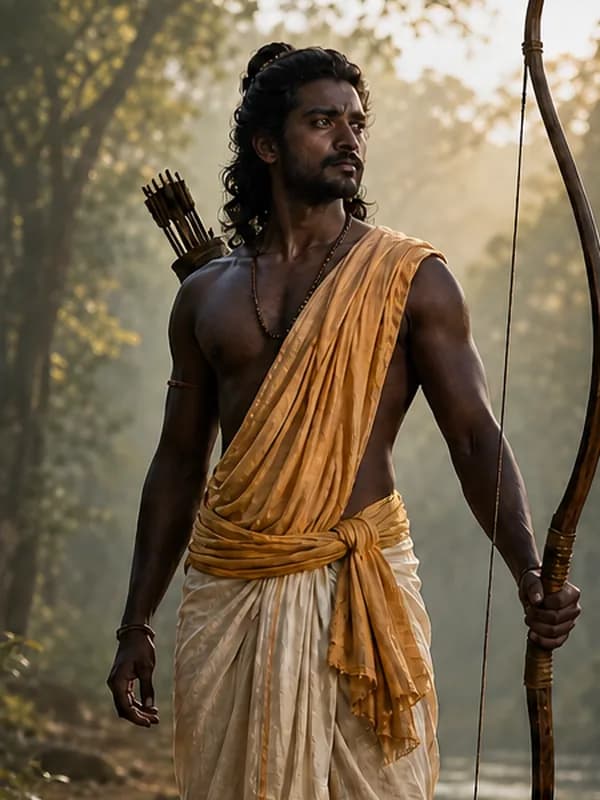 AyodhyaAI art
Rama
राम
Eldest son of Dasharatha
Heir to Ayodhya, exiled for fourteen years on the strength of a promise his father could not take back.
Bala Kanda 18
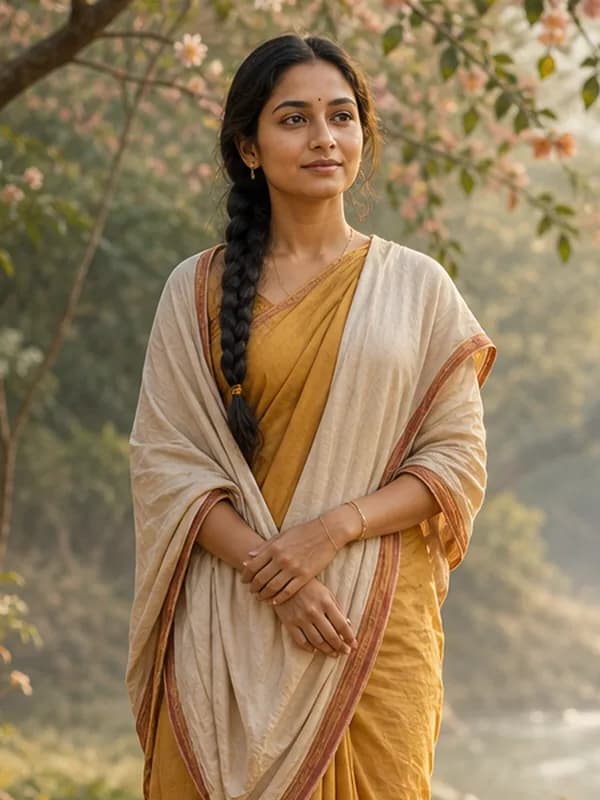 MithilaAI art
Sita
सीता
Raised from the furrow
Janaka raised her from a ploughed field, not from a womb. She goes to the forest by her own argument, and leaves Ayodhya the same way.
Bala Kanda 66
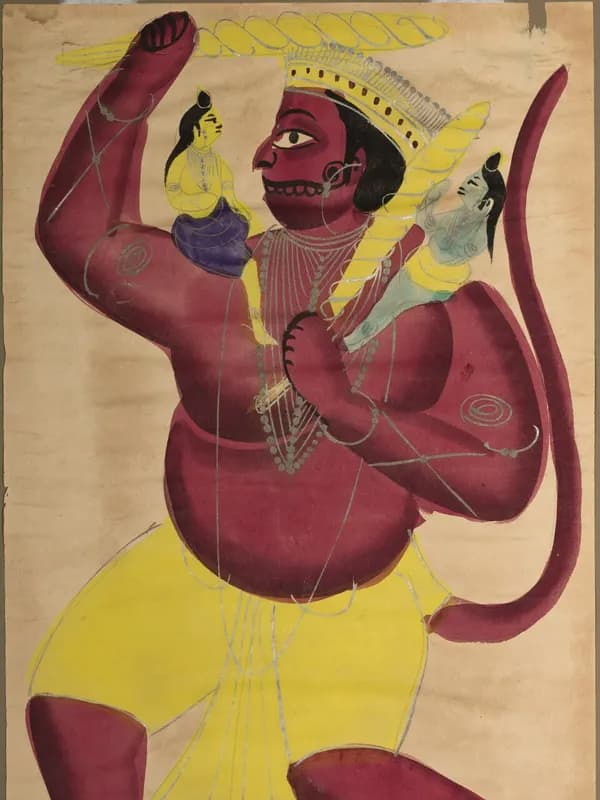 Vanara
Hanuman
हनुमान
Son of the wind
Crosses a hundred yojanas of sea alone, finds Sita, lets himself be captured so he can speak to Ravana, and burns the city on the way out.
Kishkindha Kanda 3
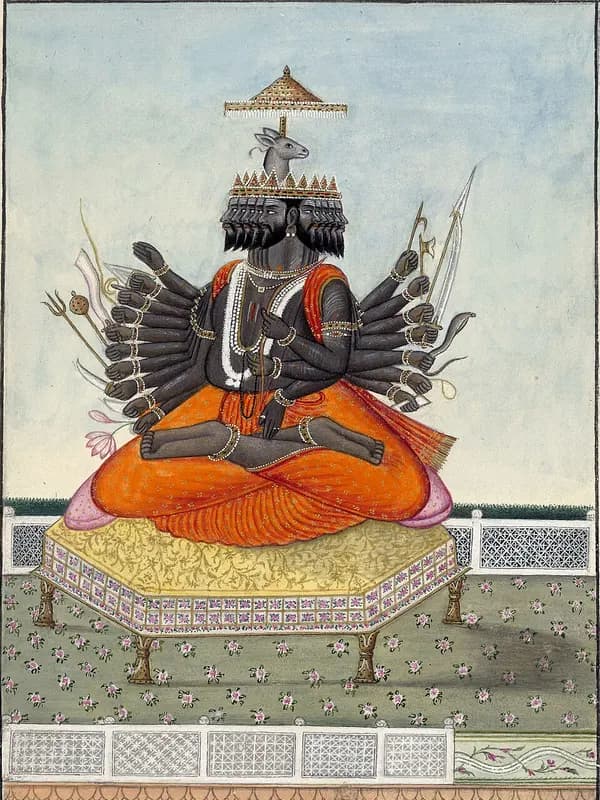 Lanka
LankaRavana
रावण
Dashagriva — the ten-necked
A brahmin sage’s son on his father’s side and a rakshasa on his mother’s. King of Lanka, and the only one who never takes the offer to end it.
Uttara Kanda 9
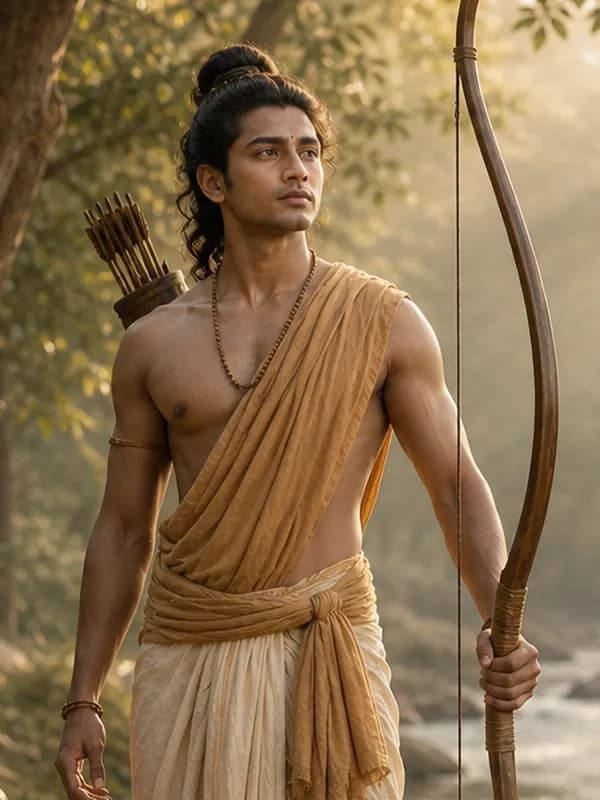 AyodhyaAI art
Lakshmana
लक्ष्मण
Sumitra’s elder son
Follows Rama into exile without being asked, and does the things Rama will not — including the disfiguring of Shurpanakha that starts the war.
Bala Kanda 18
- Ayodhya
Bharata
भरत
Regent of a pair of sandals
Offered the throne and refuses it. Rules fourteen years from Nandigrama in the name of his brother’s sandals.
Bala Kanda 18
- Ayodhya
Shatrughna
शत्रुघ्न
Sumitra’s younger son
The fourth brother, and the one the epic follows least. Stays with Bharata through the fourteen years rather than going to the forest.
Bala Kanda 18
- Ayodhya
Sumitra
सुमित्रा
The queen who bore two
Dasharatha’s third queen, and the only one to bear two sons. Both of them spend their lives attending to someone else’s.
Bala Kanda 18
 Lanka
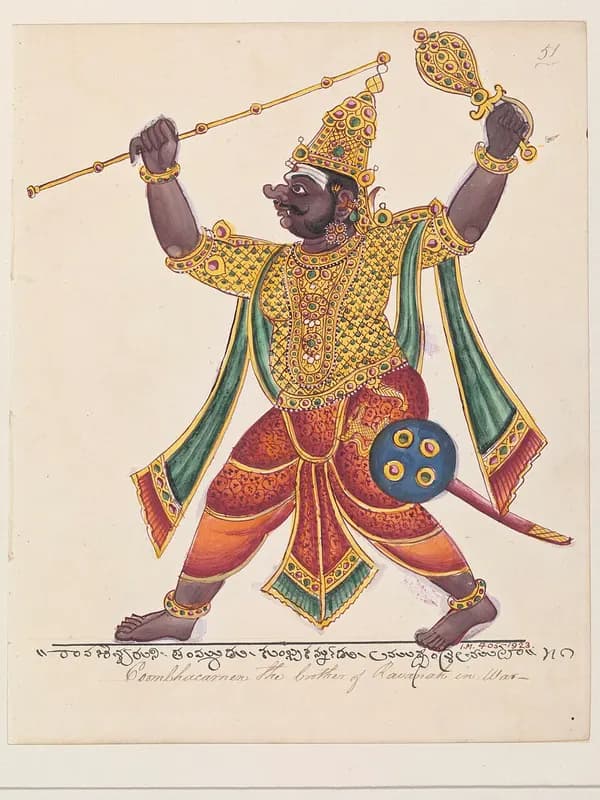
LankaKumbhakarna
कुम्भकर्ण
Woken early from a curse of sleep
Tells Ravana to his face that the war is unjust, and then goes out and fights it anyway, because it is his brother’s.
Uttara Kanda 9
 Vanara
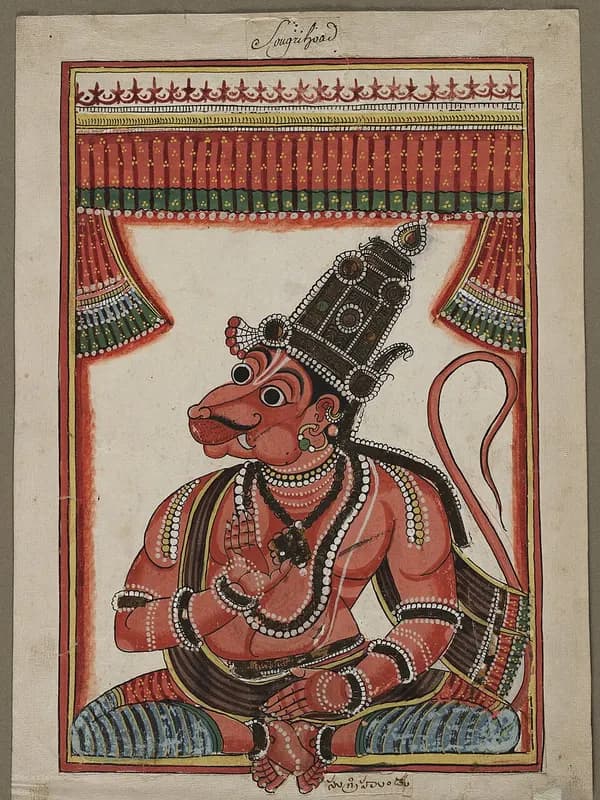
Sugriva
सुग्रीव
King of Kishkindha
Swears the alliance before fire, gets his kingdom back, and then forgets the bargain until a furious Lakshmana arrives at his gates.
Kishkindha Kanda 5
- Lanka
Vibhishana
विभीषण
The brother who leaves
Argues for returning Sita, is thrown out of the assembly for it, and crosses to Rama. Ends the war on the throne of Lanka.
Yuddha Kanda 17
- Lanka
Indrajit
इन्द्रजित्
Meghanada — the thunder-voiced
Ravana’s eldest and by far his most dangerous. Puts Rama and Lakshmana down twice with weapons no one can counter.
Uttara Kanda 12
- Lanka
Shurpanakha
शूर्पणखा
Ravana’s only sister
Widowed by her own brother, told she may take any husband she likes, and disfigured at Panchavati. Every later disaster runs back to that meeting.
Aranya Kanda 17
- Lanka
Mandodari
मन्दोदरी
Daughter of Maya
Ravana’s queen, and one of the few voices in Lanka telling him to give Sita back.
Uttara Kanda 12
- Ayodhya
Dasharatha
दशरथ
King of Ayodhya
Three queens, four sons, and two old boons he had forgotten about. Dies of grief six days after Rama leaves.
Bala Kanda 18
- Ayodhya
Kaikeyi
कैकेयी
Princess of Kekaya
Delighted by Rama’s coronation until Manthara spends two full sargas changing her mind. Then she asks for the two boons.
Ayodhya Kanda 11
- Ayodhya
Kausalya
कौसल्या
Eldest queen, Rama’s mother
Bears the eldest son and has the least say in what becomes of him.
Bala Kanda 18
- Mithila
Urmila
उर्मिला
Janaka’s second daughter
Married to Lakshmana and left behind for fourteen years — the one absence the epic barely stops to describe.
Bala Kanda 71
- Mithila
Janaka
जनक
Seeradhwaja, king of Mithila
Sets Shiva’s bow as the condition for Sita’s hand, and recites his own descent from Nimi before he agrees to the match.
Bala Kanda 71
- Mithila
Kushadhwaja
कुशध्वज
Janaka’s younger brother
His two daughters are asked for in the same breath as Janaka’s, so all four brothers marry into one house on a single day.
Bala Kanda 71
- Mithila
Mandavi
माण्डवी
Married to Bharata
Kushadhwaja’s elder daughter, and Sita’s cousin. Her sons Taksha and Pushkala are later settled at Takshashila and Pushkalavata.
Bala Kanda 71
- Mithila
Shrutakirti
श्रुतकीर्ति
Married to Shatrughna
The fourth of the brides, and the one the text follows least — matched to the brother who neither goes to the forest nor rules in another’s name.
Bala Kanda 71
- Vanara
Vali
वालि
Sugriva’s elder brother
Shot from concealment during a duel. Dying, he puts the charge to Rama directly, and the epic lets him make the argument.
Kishkindha Kanda 16
- Vanara
Angada
अंगद
Vali’s son, made heir
Carries the last offer into Ravana’s court: give Sita back and live.
Kishkindha Kanda 26
- Vanara
Jambavan
जाम्बवान्
The bear king
The party reaches the sea and stops. It is Jambavan who has to remind Hanuman what he is.
Kishkindha Kanda 67
- Sages
Vishvamitra
विश्वामित्र
The sage who asks for the boy
Takes Rama from his father to guard a sacrifice, and on the way arms him, argues him past his first killing, and steers him to Mithila.
Bala Kanda 19
- Sages
Valmiki
वाल्मीकि
The poet, inside his own poem
Gives the banished Sita shelter, raises her sons on the Ramayana, and sends them to sing it back to Rama.
Uttara Kanda 49
- Sages
Jatayu
जटायु
An old friend of Dasharatha
Attacks Ravana’s chariot alone and is cut down, but lives long enough to say who took her and which way they went.
Aranya Kanda 50
- Lanka
Maricha
मारीच
The golden deer
Thrown into the sea by Rama as a boy and still alive because of it. Pressed into the deer trick against his own judgement.
Aranya Kanda 42
About the portraits
Four characters carry public-domain art — Kalighat and Tanjore paintings and a Ravi Varma lithograph, all 18th to early 20th century. Rama, Sita and Lakshmana carry commissioned AI illustrations, marked as such on the card and in the list below; those are an artist’s impression, not a historical depiction. The rest carry the same generated seal the family trees use. Documented art is attached only where a genuine, identifiable depiction exists: three downloaded images were discarded because the crop did not actually show the character it was labelled with.
- Rama — DharmSetu Editorial · AI-generated illustration — an artist’s impression, not a historical depiction
- Sita — DharmSetu Editorial · AI-generated illustration — an artist’s impression, not a historical depiction
- Hanuman — Kalighat painting, 19th c. · Cleveland Museum of Art · CC0
- Ravana — “Ravana”, early 19th c. · Public domain
- Lakshmana — DharmSetu Editorial · AI-generated illustration — an artist’s impression, not a historical depiction
- Kumbhakarna — “The demon Kumbhakarna” · Public domain
- Sugriva — Tanjore, 18th c. · Cleveland Museum of Art · CC0
7 / 29
The story in order
Timeline of the Ramayana
66 events across the seven books
The story in the order Valmiki tells it, from a childless king’s sacrifice to Rama walking into the Sarayu — each event carrying the sarga it is drawn from.
Open the timeline →The family trees
Both are recited in the text itself rather than assembled by us — Vasistha gives Rama’s line to Janaka in open assembly, and Agastya gives Ravana’s to Rama after the war is over.
The Family Tree of Rama
Forty generations, from Brahma to the sons of Sita
When Rama asks for Sita, Janaka does not take the match on trust. The sage Vasistha stands up in the assembly at Mithila and recites the line of the Ikshvakus, generation by generation, from the unmanifest down to the four sons of Dasharatha. Janaka answers with his own descent from Nimi. What follows is those two recitations, in the order Valmiki gives them and with nothing added.
Open the tree →The Family Tree of Ravana
Two lines — a sage’s and a rakshasa’s — meeting at Kaikasi
After the war is over, Rama asks Agastya how Ravana came to be what he was. The answer takes ten chapters, and its point is that Ravana is not simply a demon: on his father’s side he descends from Brahma through the sage Pulastya, and on his mother’s from the first of the rakshasas. Valmiki builds the two lines apart and then joins them in a single marriage.
Open the tree →The seven kandas
The books are uneven on purpose: the Sundara Kanda covers a single night’s work by a single character, while the Ayodhya Kanda takes fourteen years apart in a few dozen sargas.
- 01
Bala Kanda
बालकाण्डThe book of boyhoodDasharatha’s sacrifice and the birth of the four brothers; Vishvamitra takes Rama and Lakshmana to guard his rites; the breaking of Shiva’s bow at Mithila and the four marriages. Both genealogies on this site come from its closing sargas.
- 02
Ayodhya Kanda
अयोध्याकाण्डThe book of AyodhyaThe coronation is set, and undone in a night by two boons Kaikeyi has been holding for years. Rama leaves for fourteen years in the forest, Sita and Lakshmana with him; Dasharatha dies of it; Bharata refuses the throne and rules in the name of a pair of sandals.
- 03
Aranya Kanda
अरण्यकाण्डThe book of the forestYears among the ascetics of Dandaka. Shurpanakha approaches Rama and is disfigured; Khara’s army is destroyed; Ravana comes for Sita behind a golden deer, and the vulture Jatayu dies trying to stop him.
- 04
Kishkindha Kanda
किष्किन्धाकाण्डThe book of KishkindhaThe alliance with Sugriva, the killing of Vali, and the search parties sent to the four quarters. Hanuman enters the story properly here, and at the southern shore learns that the sea is what stands between them and Sita.
- 05
Sundara Kanda
सुन्दरकाण्डThe beautiful bookHanuman crosses to Lanka alone, finds Sita in the ashoka grove, gives her Rama’s ring, lets himself be captured, and burns the city with his tail. The one book routinely recited on its own.
- 06
Yuddha Kanda
युद्धकाण्डThe book of warThe bridge, the siege, and the deaths of Kumbhakarna, Indrajit and finally Ravana. Vibhishana crosses over before it begins. It closes with Sita’s ordeal by fire and the return to Ayodhya.
- 07
Uttara Kanda
उत्तरकाण्डThe later bookAgastya tells Rama who Ravana was and where he came from — the source of Ravana’s whole genealogy. Then Sita is banished on a rumour, bears Kusha and Lava in Valmiki’s ashram, and returns to the earth. Widely held by scholars to be a later addition.
What this section is not, yet
An overview, a timeline, two genealogies and a cast. There is no sarga-by-sarga retelling here — the timeline gives the principal events, not all five hundred sargas. Every character now has a page, but most of those pages are short reference entries rather than articles: they carry the blurb, the citation and the family position, and nothing more. Four figures — Rama, Sita, Lakshmana and Hanuman — have full articles in the deity encyclopedia. The rest are worth doing properly rather than quickly.